

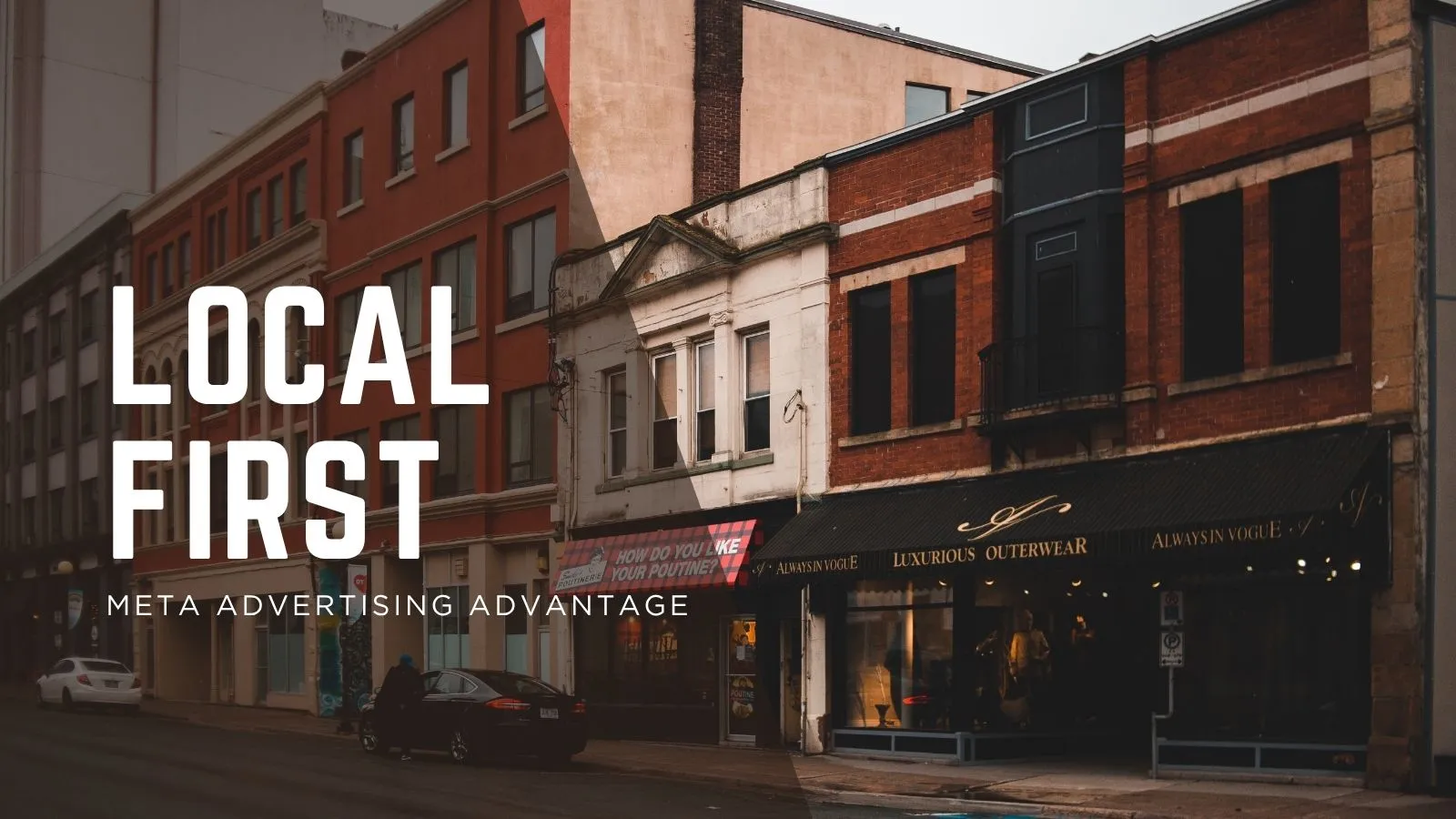
Big brands spend millions trying to seem local. You already are. Customers look for hyper-local signals, that water feature everyone loves, the neighborhood that screams “that’s my hometown!” Even just the way people talk to each other, as someone who is a local, you have the insider information. Hyper-local signals build instant trust with Meta’s local-radius audiences and with customers who specifically want to support neighborhood businesses.
Lets talk about why “local” cues are a trust shortcut, what those signals are, and how to tell stories rooting your business into the fabric of your neighborhood with local language.
Why “Local” Is a Trust Shortcut
American consumers are exhausted by seeing their hard earned money fly out of their pockets and into cooperation’s that don’t cycle that money back into their communities. Corporate layoffs, staffing shortages, ethical scandals, rising prices for essential goods, resentment over CEO pay and return-to-office mandates have left consumers feeling like big businesses are stripping resources from local communities and leaving them in the dust. As a result, consumers increasingly purchase through a “does this help my community” filter.
Local cues reduce skepticism faster than any tagline can. A big advertising agency can conjure a catch phrase or earworm jingle, but that only produces memory, not trust. People want to see their lives, their communities in the content they trust. Locals also know that a small business lives or dies by their communities support or lack there of, making them more accountable for quality.
So how do we apply this to Meta advertising? As it turns out, Meta’s location-based ad targeting rewards genuinely local creative (higher relevance, lower CPMs). Locals want to connect with local brands shapes Meta’s algorithm to serve that desire.
Visual Signals That Say “This Is Your Neighborhood”
Filming in front of recognizable local landmarks, streets, or storefronts provided visual ques that your business is in their hometown. Here in Portland, Oregon that means evergreens, Craftsman houses, beautiful brick budlings from the early 1900’s and bridges. Did you know we have 12 bridges that span the Willamette River?
Show your actual block, not a generic backdrop. Walk down the street in a neighborhood you love. However, always remember to blur out house numbers, license plates and faces of children should the pass by in the background. Seasonal/local weather, events, or scenery in the background that paint a real canvas of your local area signals to consumers that your business is rooted in their environment. Local dialects, slang, or references in voiceover/captions show that you are from a specific region.
Storytelling Angles Rooted in Place
Let your story do the heavy lifting. “Why we opened here” founder stories tied to the neighborhood create an emotional investment. Featuring how long you’ve been on that street/in that community shows that either you are a new business to help lift up or an established business that has been serving the community for years. Highlighting local partnerships (suppliers, other small businesses, local causes you support) reinforces that your business is a valuable, contributing community member and doesn’t just take money out of the community and run. Finally, sharing customer stories from people in the area proves that you are a trustworthy business that your neighbor recommends.
Using Local Language and Targeting Together
Matching ad copy/captions to how locals actually talk about the area. Naming specific neighborhoods, not just “the city” (e.g., “Sellwood Neighborhood” not “Portland”). This is the secret sauce right here. According to this LinkedIn article, Meta analyzes words and engagement behavior to determine relevance, both in copy and captions. Also, by aligning creative with Meta’s radius/geo-targeting so the messaging and audience match. This is where geotagging your images and videos become important. It’s all about prioritizing geological relevance to reach specific audiences. Thus, mentioning local landmarks people search for or navigate in your copy or videos with captions increases the relevance to your local customers.
Common Mistakes to Avoid
- Overdoing “local” clichés such as stock photo Main Street vibes or AI generated images will cause your customers to run as far away as possible if not fill your comments with remarks of disapproval. From personal experience, Portlandians despise AI. If they see an AI generated image in your ad, you’ve lost their trust and their business.
- Being too vague “we love our community!” with no specifics reflects all talk and no action or proof. Tell them why you love your community or how you plan to help support them.
- Ignoring diversity within a neighborhood — one local story isn’t the whole story. People want to feel represented and seen. Take action to make them feel this way by referring to specific groups of people you are trying to support.
Hyper-local isn’t a gimmick. It’s a genuine advantage small businesses have over large corporations. People feel better supporting small businesses. They just have to know you’re one of them! Still not convinced? Try this experiment: run one local-first ad concept and test it against a generic version that doesn’t use any local ques. See what you find.